
Why B2B Companies Shouldn’t Rely on Virality
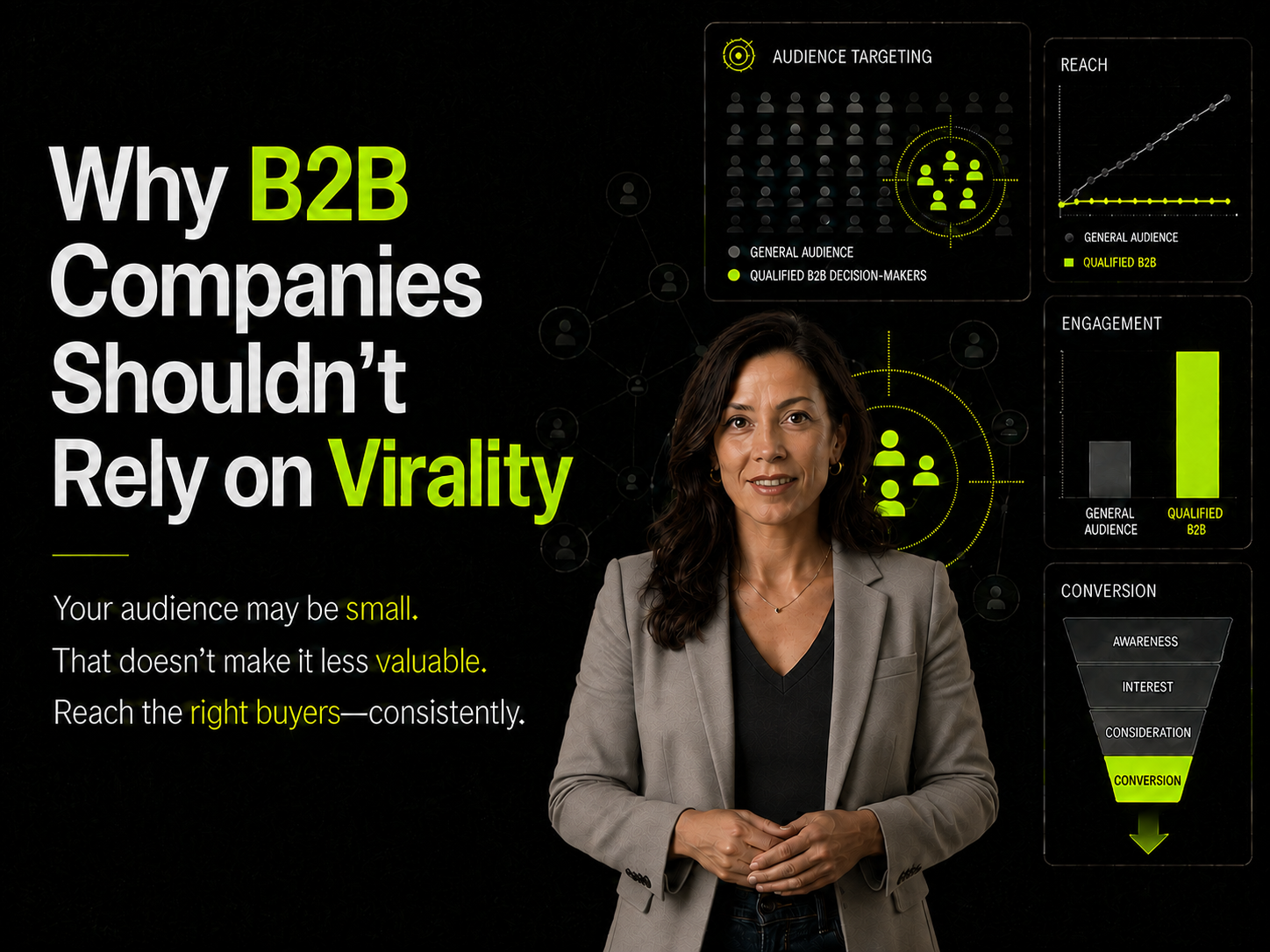
One of the biggest misconceptions in modern marketing is that a successful video campaign must be a viral sensation. As a team specializing in video production in Montreal, we help our clients realize that virality is a consumer-focused metric that rarely translates to B2B success. If you are selling high-ticket services or complex solutions, here is why you should optimize for conversion rather than mass attention.
Virality is appealing. One video you post takes off, thousands of people discover your company, and your brand suddenly reaches an audience that would have been expensive to access through advertising.
But for most B2B companies, going viral is not a reliable marketing strategy and often not a successful marketing strategy.
The problem is not that viral reach has no value. It is that B2B companies usually sell to a relatively small group of decision-makers, often through a buying process that takes weeks or months. A video can attract a large number of views without reaching the people who can actually buy the service.
Instead of depending on an algorithm to deliver the right audience, B2B companies need a distribution system that puts useful video content in front of relevant prospects repeatedly and gives them a reason to take the next step.
1. Small B2B Markets Put a Natural Limit on Virality
The smaller and more specialized your target market is, the harder it becomes to create content that is both highly relevant to potential buyers and appealing enough to spread to a mass audience.
Virality usually requires a video to interest a large pool of people. Many B2B companies do not serve a large pool of potential buyers. A company selling specialized software, industrial equipment, consulting, logistics, or commercial services may only need to reach a few hundred or a few thousand qualified decision-makers.
Consider a manufacturer that sells equipment to food-processing facilities. A video about a specific production challenge may be extremely relevant to plant managers and operations directors, but incomprehensible to most social-media users.
This is where some B2C companies have an advantage. A consumer brand may sell a relatively simple product to millions of potential customers. If one of its videos reaches a large general audience, even a small percentage of viewers making a purchase can produce meaningful revenue. With a broad market and a short path from discovery to purchase, a B2C company may sometimes get away with relying more heavily on viral distribution—although virality remains unpredictable.
B2B companies rarely have the same conditions. Their audiences are smaller, their offers are often more complex, and a sale may require several decision-makers and multiple interactions over time.
For B2B companies, the objective should not be virality at any cost. It should be maximum relevance and visibility within the market the company can actually serve.
2. Virality Is Too Unpredictable to Build a Pipeline Around
Even experienced creators cannot guarantee that a particular video will go viral. Platforms decide how content is distributed based on constantly changing signals, audience behavior, competition, and timing.
This makes virality difficult to plan around. A company cannot reliably forecast how many qualified leads a viral attempt will generate, when those leads will arrive, or whether the audience will be located in the markets it serves.
A repeatable marketing system should not depend on an outcome the company cannot control.
This does not mean B2B videos should be boring or that organic reach should be ignored. Strong hooks, clear storytelling, useful information, and engaging creative can improve both organic and paid performance. The difference is that organic reach should be treated as an additional benefit—not as the entire distribution plan.
3. Social Platforms Optimize for Engagement, Not Buying Intent
Social media algorithms are designed to keep users watching and interacting. They are not designed to ensure that every view comes from a qualified prospect.
A video may perform well because it is entertaining, controversial, surprising, or emotionally engaging. Those qualities can make the content more effective, but high engagement does not necessarily indicate commercial intent.
This is especially important for B2B companies with high-ticket or complex offers. Someone can enjoy a video without having the authority, budget, timing, or business need required to become a customer.
Views, likes, and shares can help a brand grow, but they should not be confused with sales opportunities. The more useful questions are:
Did the video reach people in the target market?
Did qualified viewers visit the website or learn more about the offer?
Did the content generate inquiries, booked calls, or other meaningful actions?
Did it help prospects understand why the company is a credible choice?
Those signals are more closely connected to business growth than view count alone.
4. B2B Buyers Usually Need More Than One Interaction
Most B2B purchases are not impulsive. The buyer may need to understand the problem, compare possible solutions, discuss the decision internally, justify the expense, and build confidence in the provider.
One viral video rarely accomplishes all of that.
A prospect might first encounter a short educational video, later watch a customer story, visit the company’s website, see a retargeting ad, and eventually review a case study before making contact. Each piece of content answers a different question and reduces a different source of uncertainty.
That is why repeated, purposeful exposure is so important. B2B video should support the buyer throughout the decision process rather than depending on a single moment of attention.
5. Viral Content Can Attract Attention Without Explaining the Offer
Content built primarily for reach often simplifies the message so it can appeal to as many people as possible. That can help a video spread, but it may leave little room to explain a technical service, demonstrate expertise, or communicate why the company is different.
B2B prospects often need more substance. They want to know:
What problem does the company solve?
Who is the service designed for?
How does the process work?
What results has the company produced?
Why should the buyer trust this team?
A successful B2B content strategy can still be engaging, but the creative should serve the sales message. Attention is only the first step. The video also needs to create understanding, credibility, and interest in the offer.
6. Paid Distribution Makes Reach More Intentional
Paid distribution allows a B2B company to place its videos in front of a more defined audience instead of waiting for organic algorithms to find one.
Depending on the platform, campaigns can be built around factors such as industry, job function, company characteristics, location, interests, search intent, or previous interactions with the brand. No targeting system is perfect, but this approach gives the company far more control over who receives the message and how frequently they see it.
Paid campaigns also allow one strong video to keep working after its initial organic reach slows down. Rather than publishing the video once and hoping it spreads, the company can distribute it consistently to the market it was created for.
This is especially useful for B2B businesses with a narrow audience. They do not need everyone to see the content. They need the right people to see it enough times to remember the company when a need develops.
7. Distribution Creates Data That Can Improve a Marketing Campaign
A controlled distribution strategy does more than generate reach. It creates feedback.
Companies can compare messages, hooks, formats, audience segments, and calls to action. They can see which videos hold attention, which topics generate website visits, and which audiences are more likely to take the next step.
That data can then improve future ad creatives. If a customer problem consistently earns attention, the company can produce more content around it. If viewers watch a video but do not act, the offer or call to action may need to be clearer. If one audience responds better than another, the campaign can shift its budget accordingly.
Paid distribution can also help create audiences for future nurturing. People who watched a meaningful portion of a video, visited the website, or interacted with the company can later receive case studies, testimonials, educational content, and direct-response offers.
Instead of treating every video as an isolated post, the company begins building a system that learns over time.
8. The Better Strategy: Create for Attention, Distribute for Control
B2B companies do not have to choose between engaging content and strategic marketing. The strongest approach combines both.
The video should be compelling enough to earn attention, but specific enough to attract the intended buyer. Organic publishing can generate additional exposure and build the company’s presence. Paid distribution can then ensure that the content reaches relevant prospects consistently.
A practical B2B video campaign might include:
A core video that introduces the problem the company solves.
Short videos that answer common questions and address customer pain points.
Case studies or testimonials that provide proof.
Paid campaigns that distribute the content to the target market.
Retargeting that continues the conversation with interested viewers.
Campaign data that guides the next round of creative.
In this model, a viral result is welcome, but it is not required. The campaign can succeed because the company has created a reliable way to reach, educate, and nurture potential customers.
Build a Video Marketing Strategy That Does Not Depend on Luck
Virality can amplify a strong campaign, but it should not be the foundation of one. B2B companies need relevant reach, repeated exposure, clear messaging, and a way to measure what moves prospects closer to a decision.
That requires thinking beyond production. The company must decide who the video is for, what it needs to communicate, where it will be distributed, and what should happen after someone watches it.
New Media Productions provides video production in Montreal for businesses that want video content built around a clear marketing objective. We help companies develop the concept, script the message, produce the creative, and prepare video assets for paid distribution.
If you are planning a B2B video campaign, contact us to discuss your project.
Once the strategy is clear, distribution becomes the next priority. Learn why great video content still needs paid advertising and how paid campaigns can help businesses reach qualified audiences, gather useful data, and nurture prospects over time.